



By Phil Kalas
Shell cordovan is considered to be the finest leather in the world.
But what is shell cordovan, and what makes it so highly regarded?

Genuine Horween Shell Cordovan is an equine leather famous for its durability, self-polishing character, breathability, deep color, smooth feel, and bright luster. It has developed something of a cult following, and it is used in high-end:
- Shoes
- Boots
- Belts
- Wallets
- Watch straps.
Shell Cordovan is challenging and expensive to produce because:
- It is a natural product tanned over six months with natural food-grade fats, oils, greases, and waxes.
- The tanning process, performed since 1905 at Chicago’s Horween Leather, includes about 100 steps, most of which are performed manually or using old-world machines virtually unchanged since the industrial revolution.
Shell Cordovan Is Self-Polishing
People familiar with shell cordovan know that it is a self-polishing leather. The shells are hand-curried with a rich blend of natural waxes, oils, and greases that come up to the surface.
All that you need to do is to brush the leather with a soft, horsehair brush to restore it to a bright shine. Notice, in the photo below, the shoe on the right has a dull, waxy look, and the shoe on the left is after brushing. No other product was applied to the shoes.

The Exceptional Patina of Sheel Cordovan Leather
Naturally finished, aniline leathers like Shell Cordovan have a unique ability to age with use. Typically, vegetable-tanned leathers like these will become darker and more golden brown with wear. Further, layers of luster start to develop.
Curious to see this dramatic transformation? Check out this YouTube video showcasing some dramatic patina with 8 years of use.
Not All Leather Is Created Equally
Shell cordovan is known for some of its unique features, including its:
- Extreme durability: Shell cordovan’s dense fiber structure resists creasing and pebbling, helping the leather remain smooth and supple even with years of regular use.
- Extraordinarily bright luster without looking like a plasticky top coat: The leather develops a naturally high-gloss sheen from within, creating depth and clarity without an artificial-looking finish.
- Rich shell cordovan aroma: A warm, subtly sweet scent reflects the traditional vegetable tanning process used to produce genuine shell cordovan.
- Ability to patina and develop an even more complex color and luster over time: With wear, the leather gradually deepens in tone and develops unique visual character.
- Smooth-as-glass feel: The tightly packed fiber structure creates an exceptionally sleek, almost polished tactile surface.
- Self-polishing: Natural oils within the leather help minimize the appearance of minor scuffs with simple brushing or everyday wear.
When Dan and I first started crafting wallets, our friends and family would ask us, “what is so special about this leather? I can just buy a $20 wallet from a big box store. Leather is leather, right?”
Our response was to give them a wallet and let them experience the difference. Most people:
- First noticed the bright luster and extremely smooth feel, followed by the distinct, leathery aroma of the shell cordovan. They immediately “got it."
- Still carry their wallet seven years later. After years of abuse, the leather holds up, and their wallets look better than the day they got them.
Shell cordovan fans take pride in their wallets and don’t have to replace them every year (like the big box store wallet) because the leather develops a deeper color and luster. Like a fine wine, the shell cordovan develops over time and gets better with each wearing.
Before and After
Below is a new, natural shell cordovan Fat Herbie on the left. On the right side is my friend's Fat Herbie in the same natural shell cordovan, but after five years of daily use.

Spanish Origins of Shell Cordovan Leather
The original Cordovan tannage was pioneered in Cordoba, Spain by the Visigoths in the seventh century and was called cordoban.
In the early 19th century, the Cordoban leather process was picked up by the Germans and, because of the bright mirror-like luster, they coined the term “speigalware” which translates to “mirror goods” in English.
The special shell cordovan tanning process was refined by the Dutch and Germans and was subsequently brought to the United States in the middle of the 19th century.
Coming to America
In 1905, Horween Leather Co. started producing shell cordovan exclusively for use in razor strops. At the time, razor strops were very popular, and they were used to hone and sharpen straight razors that were used for men’s shaving.
With the popularization of Gillette’s safety razor, including replaceable razors in 1901, most people moved away from straight razors and their razor strop companions. With that, Horween needed a new market for its shell cordovan.
The first obvious home was to the existing shaving-goods industry. Charles Doppelt from MA Doppelt & Co. created the first men’s toiletry kits in shell cordovan and became popularized by the term Dopp Kit.
Shell cordovan also found a home in many hats and hat brims. Interestingly, there were also many shell cordovan sleeve garters which allowed men to customize their sleeve lengths without the need of a tailor. But the most popular use was still yet to be found.

Popularization in Men’s Dress Shoes
Around 1912, Florsheim began making men’s shell cordovan dress shoes. The most popular color at this time was color #4 (also referred to as burnt cherry), a medium reddish brown shade that uses half of the amount of dye mix as today’s popular color #8 shade.
Most industry in the early 1900s was localized. Leather and footwear at the time were no exception. Suppliers and manufacturers of the footwear industry were very geographically close in Chicago.
We theorize that Isadore Horween (first-generation American and founder of the tannery) took a horse and buggy four miles across town from the Horween Leather tannery to the Florshieim factory located at Pulaski and Belmont (the building is still there!) to demonstrate shell cordovan as a superior footwear leather.
Shell cordovan works exceptionally well as a dress shoe because:
- Its vegetable-tanned method allows the shoe to hold shape and develop a great shine.
- The shell cordovan membrane is porous, despite people having differing opinions on how breathable shell cordovan is.
Arnold Horween Jr. (3rd generation tanner) had a fantastic way to demonstrate how porous the leather was by blowing smoke straight through the shell cordovan leather. Florsheim was a pioneer in shell cordovan footwear. Their shell cordovan dress shoes are still highly collectible.
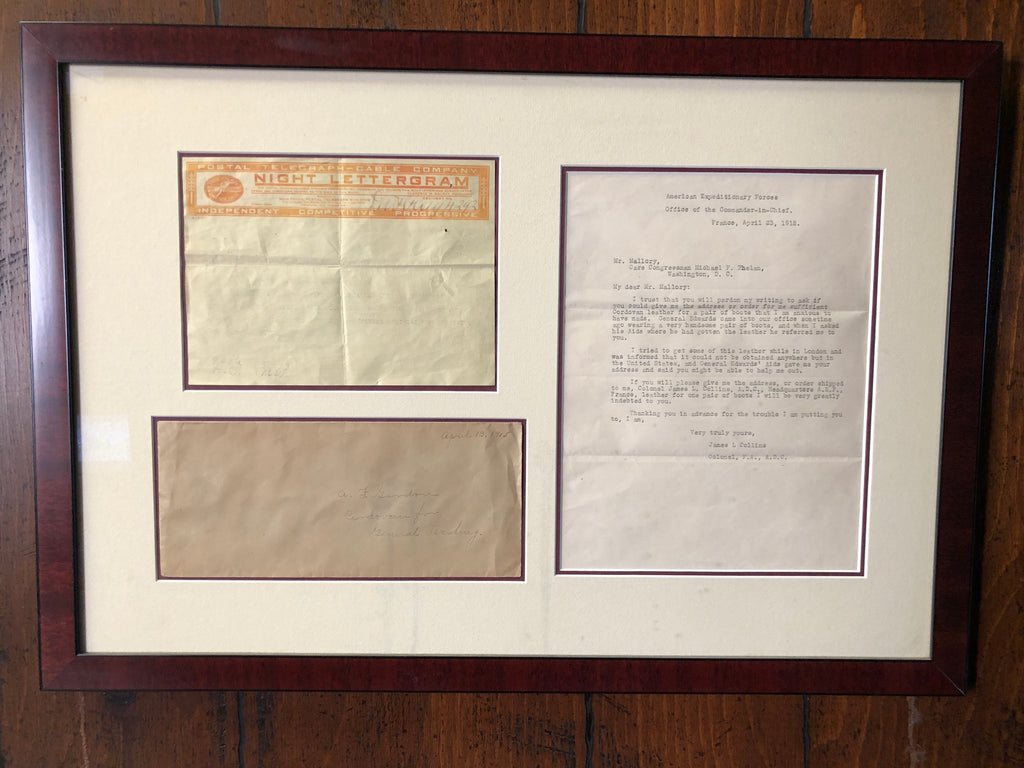
Shell cordovan was used in several boots made for officers in WWI. There is an amazing framed letter from exactly 100 years ago hanging on the walls in Horween Leather’s offices.
Shell Cordovan Leather Today
Today, 113 years after Isadore pioneered American genuine shell cordovan, there is still a huge demand for shell cordovan footwear crafted by Alden, Allen Edmonds, Viberg, Crockett & Jones, Carmina, Church, Edward Green, Paraboot, Ludwig Reiter, Dinkelacker, Rancourt, and many more.
Shell Cordovan FAQs
How many different shell cordovan colors does Horween make?
Through the years, Horween has dabbled in many custom shell cordovan, but there most popular are black and color #8. Color #8 is a deep brown/burgundy shade that has become synonymous with the color name “cordovan”.
Here is a partial list of current shell cordovan colors that Horween offers:
- Color #8
- Black
- Dark Cognac
- Garnet
- Bourbon (which replaced whiskey)
- Natural
- Color #4
- Navy
- Ivywood
- Amaretto
Why is the Color 8 so much more prevalent than the others?
Color 8 gets ordered the most from footwear brands like Alden and Allen Edmonds. It's simply more popular. Also, color #8 goes well with everything.
I’ve noticed there are a lot of black and color #8 shell cordovan shoes available. Why aren’t there more rare colored shells available? Is it more difficult to make whiskey, ravello, cigar, and color #4?
The shells themselves all start out with different base colors because of the vegetable tanning and natural oils. It is particularly hard to get light colors.
Why is shell cordovan leather so expensive?
Each shell is roughly 2 square feet, where most side leather is 20-25 feet. Also, shell cordovan goes through about 100 process steps over six months. It’s very difficult to process.
How thick can shell cordovan be?
Each shell is different, and the thickness even varies in one individual shell. Sometimes dramatically. I see normal range of thickness 1mm to 3mm. The thickness is totally based on how far we have to shave to expose the shell.
Here is a demonstration illustrated in 1961 by Ralph Horween of how the shell sits between layers like a sandwich.

What other animals besides horses could create a similar feeling product?
All equine animals have a shell.
Horses, mules, and zebras have shells, for example.
What's the demand for shell cordovan been over the past several decades, say 80s, 90s, 00s, 10s, and current?
It's hard to gauge because the demand for shell cordovan is higher than the supply. It has risen steadily decade over decade.


