



By Phil Kalas
What Is the Difference Between Shell Cordovan & Chromexcel® Leather?
That's one of our most frequently asked questions. The answer, simply put, is that both are among the finest leathers Horween® makes. They are built differently and age differently. Below we compare how each is tanned, how each wears, and the pros and cons of both.
Shell cordovan is widely regarded as the finest leather in the world because of its bright luster, non-creasing grain character, great leather smell, durability, and ability to develop and keep these characteristics over time.
However, it should not overshadow leathers like Chromexcel®. Both have their own unique qualities and values.
Let's explore the differences, looking at:

Horween® Chromexcel®
Shell cordovan is an equine leather cut from the dense shell under a horse hide and vegetable-tanned by Horween® over about six months; it does not crease and builds a mirror-like luster. Chromexcel® is a combination-tanned, hot-stuffed steerhide with a signature pull-up that feels broken in from day one. Shell costs more because each horse yields only about two square feet of shell.
| Horween® Shell Cordovan | Horween® Chromexcel® | |
|---|---|---|
| Source | Shell under the hindquarter of a horse hide | Most often steerhide; also horse, bison, cowhide |
| Tannage | Vegetable-tanned, about six months | Combination-tanned (chrome plus vegetable retan), hot-stuffed, 89 processes over 28 working days |
| Creasing | Ripples, never creases | Creases and develops pull-up |
| Scratches | Can be fully buffed out | Can be buffed in thanks to the greases |
| Heat | Not resilient to heat | Heat resistant |

Chromexcel® (aka CXL leather) is the classic “pull-up” leather, meaning that, when folded and flexed, the greases that were impregnated into the skin migrate, causing a very nice tonal effect and beautiful depth of color.
CXL leather also has a very bright luster or can be left unpolished to have more of a matte finish look. Known as a versatile leather, Chromexcel® is often found in products, like (and not limited to):
- Boat shoes
- Classic shoe styles from Alden and Allen Edmonds
- Many belts and small leather goods.
Chromexcel® has a “refined ruggedness” and will quickly develop character, with similar aesthetics to your grandfather’s old leather wallet.
What about the Hides?
Horween® Chromexcel® is most often found on steerhides. However, it can also be produced on horsehides, bison, and cowhides. Each animal's grain character and thickness is different. Steerhides tend to have the most clean grains and thickest hides. Horsehides have rough grain and are very thin.
Horween® CXL leather is a combination tanned leather. It is a chrome-based tannage with a vegetable retannage. With this combo, you get the best of all worlds:
- Strength and resilience from the chrome and natural character
- Ability to mold and form
- Patina potential from the veg tanning.
Additionally, CXL leather is hot stuffed with a rich blend of cosmetic-grade waxes, oils, and greases. This hot stuffing blend gives the leather a rich hand feel, exceptional color depth, and a glowing luster.
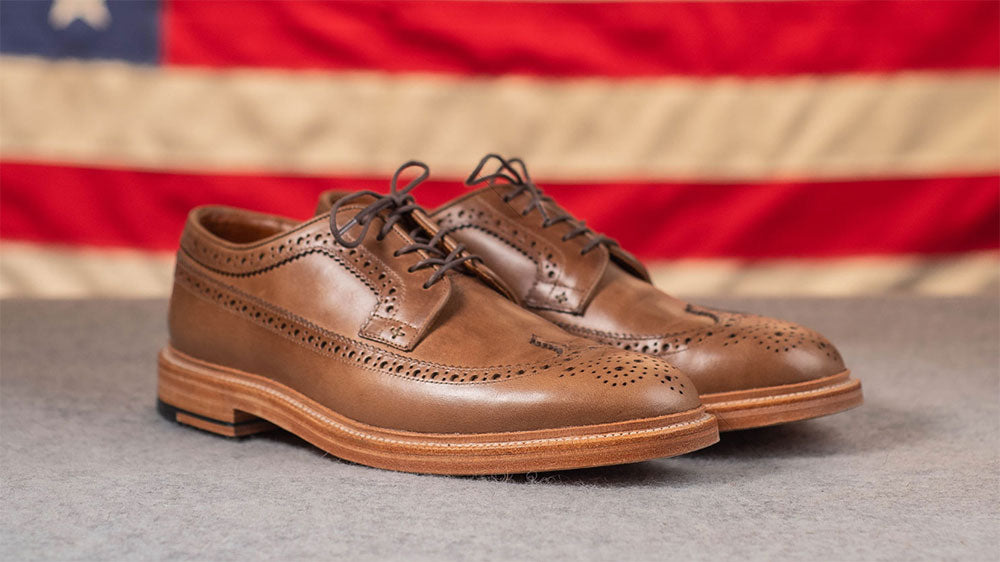
Horween® Chromexcel® Pros
- Beautiful color depth
- Subtle luster
- Heat resistant
- Molds and conforms to shapes
- Rich, waxy, and oily feel
- Versatile style
- Self-Polishing
- Patina potential
- Can take a beating: Scuffs and scratches can be polished in
Horween® Chromexcel® Cons
- Dents, scuffs, and scratches easily
- Heavy in mass
- Very rich in oils - color crocking can be bad for light colored clothing
- Can have loose grain. Experienced crafter required.
- Only available in earth tone colors
Chromexcel® is only made by Horween® Leather Co. in Chicago where it has been made consistently since the early 1900’s. The process in creating a piece of Chromexcel® takes 89 separate processes (many of which are performed completely by hand) and takes 28 working days to complete.
Unlike many leathers, Chromexcel® is air dried which allows the leather to shrink back on itself. Many tanneries will cringe at this concept because it decreases the yield (tanneries sell leather by the square foot) but also gives the leather a tighter, more calf-like, break as opposed to other drying methods like pasting or vacuum drying.
Chromexcel® and shell cordovan will scratch and scuff rather easily. Due to the high grease content, these scratches can be buffed out rather easily. However, shell cordovan is the only leather where you can completely remove a scratch.

Horween® Shell Cordovan
Shell cordovan was originally produced to hone straight razors, as it was used for razor strops in the early 1900s. It has been made on a daily basis in Chicago by Horween® since 1905. Shell cordovan is like a great wine that only gets better with age, except you can drink it every single day.
It's definitely the best leather to use in any small leather good, especially for a wallet. The action your pocket has on the wallet with daily use leads to a polishing effect, which allows the vegetable-tanned shell cordovan to develop an amazing patina over time. As mentioned above, shell cordovan has a very beautiful mirror-like luster which can be brought back again and again using different polishing methods.
We’ve also worked with Shell Cordovan on a larger piece: a sling bag. Designing it meant solving different questions about the strap, fit, and pocket layout through more than 20 prototypes. Read how our Shell Cordovan Sling Bag came together.
At Ashland Leather Co., we use a modified version of the Mac Method to polish our wallets, along with a small amount of cordovan cream. This involves moisture, a lot of brushing, and a very small amount of polish.

Shell Cordovan Pros
- Never creases
- Exceptional durability
- Dramatic patina
- Porous and breathable
- Self Polishing
- Mirror-like luster
- Ability to mold and form
- Versatile: Can be dressed up or down
- Intoxicating scent
- Scratches can be easily filled in
Shell Cordovan Cons
- Very expensive
- Will dent, scuff, and scratch
- Not resilient to heat
- Only available in earth tones
- Odd shapes, small yield, varying thickness (requires highly skilled craftsperson)
Cordovan has a very unique feature of not creasing, if you look at many pairs of leather shoes where the toe flexes just above the toe box and below the laces you will see a pebbled effect. Here is what is happening:
- After flexing and long periods of use, the grain layer of the leather is separating from the fiber layer of the skin.
- This separation creates a sometimes undesirable or inconsistent pebbled look.
Shell cordovan will never pebble because we are not using a grain layer at all , the unique fiber structure of the shell cordovan is found under the skin of any equine animal’s hind quarter (yes, shell cordovan is horse butt). In fact:
- These shells are oval shapes.
- There are approximately two square feet of ovals in each horse (as opposed to a 50 square foot bovine hide).
- Handling and processing these significantly smaller pieces leads to a higher cost, as does the extensive 6-month (mostly by hand) tanning process.


Watch on YouTube
Still weighing the two? Our guide to Horween® leather covers every tannage we work with and how each one ages in the pocket.
Frequently asked questions
Is shell cordovan better than Chromexcel®?
Neither is simply better. Shell cordovan never creases, holds a mirror-like luster and is the most durable leather we work with. Chromexcel® costs far less, feels supple immediately and shows pull-up and character quickly. Choose shell for a lifetime heirloom finish and Chromexcel® for a rugged, broken-in look.
Why is shell cordovan so much more expensive than Chromexcel®?
Each horse yields only about two square feet of shell, against a roughly 50 square foot cowhide, and the tannage takes about six months, mostly by hand. For the full breakdown, read Is Shell Cordovan Worth It?
Is Chromexcel® water-resistant?
Yes. The hot-stuffed waxes and oils make Chromexcel® water-resistant. Wipe off water and let it dry naturally.
Can you remove scratches from shell cordovan and Chromexcel®?
On both, most scuffs buff out with a horsehair brush because of the oils and waxes in the leather. Shell cordovan is the only leather where a scratch can be removed completely.